






Livraison gratuite le lendemain
Excellent avis clients
Garantie du meilleur prix

Adoré par 10,000+ golfeurs heureux
6 PRODUITS

Épuisé


Épuisé

Épuisé


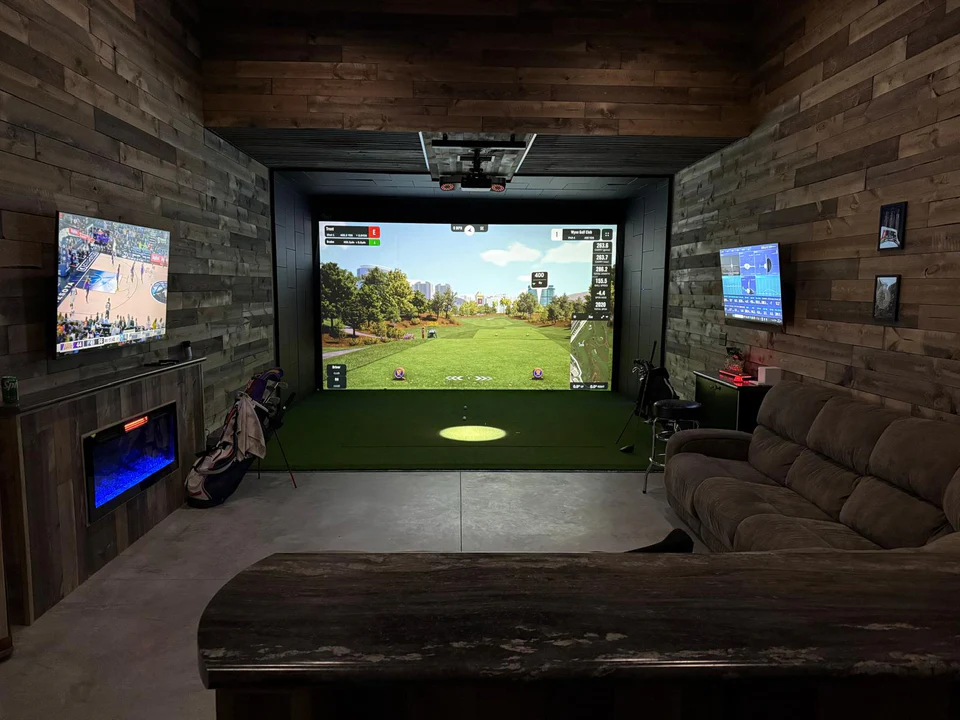
C’est facile de réussir les éléments coûteux dans une pièce de simulateur de golf et de choisir un moniteur de lancement haut de gamme. Puis vous frappez quelques balles et réalisez que tout l’espace sonne dur, résonne et ressemble davantage à un garage qu’à un sanctuaire de golf.
C’est là qu’interviennent les dalles acoustiques. Elles adoucissent votre installation, réduisent le claquement sec des sons réfléchis et rendent l’ensemble plus confortable.
Les dalles acoustiques apportent une touche finale avec de nombreux avantages pratiques. Dans un bay de simulateur aux surfaces dures, le son rebondit dans l’espace et s’accumule sous forme de réverbération. Les panneaux acoustiques absorbent cette énergie, aidant à calmer la pièce et à rendre chaque coup plus contenu.
Il est aussi important de considérer les pièces de simulateur comme bien plus que de simples espaces bruyants. Ce sont des espaces d’impact. Même si votre swing est propre, le coup décentré occasionnel ou le ricochet font partie du jeu. Les dalles acoustiques murales aident à protéger les zones environnantes, en particulier autour de la zone de frappe et des murs latéraux, tout en améliorant la finition de votre bay. Ce mélange de protection et de mise en valeur explique en grande partie pourquoi elles ont tout leur sens dans un simulateur de golf.
Une meilleure acoustique rend l’entraînement moins agressif. Une pièce plus rembourrée, plus soignée, donne davantage envie d’être utilisée. Et quand une pièce de simulateur est agréable à utiliser, elle devient un endroit où l’on a vraiment envie de passer du temps.
Un point à garder à l’esprit avant de recouvrir votre espace de dalles acoustiques de haut en bas : il n’est pas nécessaire de transformer la pièce en bunker rembourré pour percevoir une différence. Une couverture raisonnée aux bons endroits suffit à faire passer un bay de simulateur d’un espace bruyant et inachevé à un espace maîtrisé et réfléchi.
Si vous avez déjà investi dans l’écran, le tapis et le moniteur de lancement, c’est le genre d’amélioration qui aide l’ensemble de l’installation à paraître (et à sonner) complet.
Les dalles acoustiques pour golf sont un moyen d’améliorer l’acoustique de votre pièce de simulateur de l’intérieur. Elles aident à absorber les sons réfléchis et à réduire l’écho aigu créé par les impacts sur l’écran, le contact club-balle et les surfaces murales dures. Elles ne sont pas conçues pour empêcher le bruit de se propager dans le reste de la maison, même si elles y contribueront dans une certaine mesure !
Dans un studio de golf en intérieur, l’emplacement compte autant que les dalles elles-mêmes. Les plus grands gains viennent généralement de l’ajout de dalles acoustiques sur les murs latéraux, au plafond au-dessus de la zone de frappe, et sur d’autres surfaces dures proches de l’écran et de la zone d’impact, car ce sont les zones où le son se réfléchit le plus fortement. Si vos dalles risquent de se trouver près de zones de coups ratés, la durabilité compte aussi.
Un petit pan de dalles acoustiques sur un mur ne va pas transformer le son d’une salle de simulateur réverbérante. Le traitement acoustique est plus efficace lorsqu’il est utilisé de manière stratégique et en quantité suffisante pour apaiser correctement votre espace. Pour la plupart des studios de golf en intérieur, cela signifie traiter d’abord les principales zones de réflexion, puis ajouter du revêtement partout où la pièce paraît encore bruyante, agressive ou creuse.
Il est facile de se concentrer sur les murs latéraux et d’oublier que le plafond au-dessus de la zone de frappe est souvent l’une des plus grandes surfaces de réflexion de la pièce. C’est là qu’une grande partie du claquement sec de l’impact et du choc de la balle rebondit directement dans l’espace. Les panneaux et dalles de plafond sont souvent l’une des améliorations les plus judicieuses, car ils peuvent améliorer l’acoustique de la pièce tout en ajoutant une protection dans une zone qui peut encaisser un coup manqué occasionnel.

Voulez-vous des conseils personnalisés ?
Réservez une consultation gratuite
Nous sommes là pour vous aider ! Choisissez une option ci-dessous.